Best Wool Socks for Raynaud's Disease and Cold Feet
Cold feet aren't always just a matter of preference. For people with Raynaud's disease, even a slightly cool room can trigger a circulation response that leaves toes white, numb, or painful. The right sock doesn't cure the condition — but it can significantly reduce the frequency and severity of attacks at home.
This guide explains what to look for in a sock when warmth isn't optional, and why hand-knitted New Zealand wool holds up better than the alternatives.

What People with Raynaud's Actually Need in a Sock
Most sock advice is written for people whose feet just get a bit cold. Raynaud's is different — it's a vascular condition that cuts blood flow to the extremities, and the threshold for triggering an episode is much lower than most people would expect. A sock designed for "warmth" in the general sense is often not warm enough, fitted wrong, or made from a material that retains moisture and accelerates heat loss.
There are six things that matter:

1. Deep, Lasting Warmth
The sock needs to create and sustain heat, not just slow heat loss. Wool traps air between fibres, creating a natural insulation layer. Hand-knitted wool does this better than machine-knit because the denser construction holds more air pockets. Synthetic fleece feels warm initially but compresses and loses insulation quickly.
2. Moisture Management
If feet sweat — even slightly — a sock that can't wick moisture away will turn damp and cold fast. Wool absorbs moisture vapour without feeling wet, then slowly releases it outward. Cotton and synthetic fibres hold dampness against the skin, which is exactly what you don't want when you're trying to stay warm.
3. Non-Constricting Fit
Anything that presses on the foot or ankle can further restrict circulation, which is the last thing someone with Raynaud's needs. Tight elastic bands at the cuff, compressive weaves, or ill-fitting sizing all create pressure points. Hand-knitted socks have a more flexible, accommodating structure than machine-made ones — there's natural give in every direction.
4. Thick, Cushioned Sole
Cold floors are a major trigger. Hard surfaces — tiles, floorboards, concrete — draw heat rapidly from the foot's plantar surface. A thick sole creates a thermal barrier. Our fleece-lined slipper socks are specifically designed for this: a layer of warmth between foot and floor.
5. Breathable, Not Sweaty
Paradoxically, a sock that's too insulating without breathability causes problems — overheating then sudden cooling when you move from a warm to cool area. Wool self-regulates: it insulates when it's cold and breathes when it's warm, keeping the foot in a steadier thermal range.
6. Durable for Daily Wear
People who need warm socks at home often need to wear them constantly. A sock that pills, thins, or loses its shape after 10 washes is a practical problem. Hand-knitted New Zealand wool holds its structure significantly longer than machine-knit alternatives.

Material Comparison for Cold Feet
| Material | Warmth | Moisture Wicking | Breathability | Fit Flexibility | Durability |
|---|---|---|---|---|---|
| NZ Wool (hand-knit) | Excellent | Excellent | Excellent | Excellent | Excellent |
| Merino Wool (machine) | Very Good | Very Good | Very Good | Good | Moderate |
| Fleece (synthetic) | Good | Moderate | Poor | Good | Moderate |
| Thermal Cotton | Moderate | Poor | Good | Moderate | Moderate |
| Standard Cotton | Poor | Poor | Good | Moderate | Moderate |
| Acrylic / Polyester | Low | Poor | Poor | Low | High |

slipper socks for cold feet
Our warmest slippers for those dealing with Neuropathy and Raynaud's
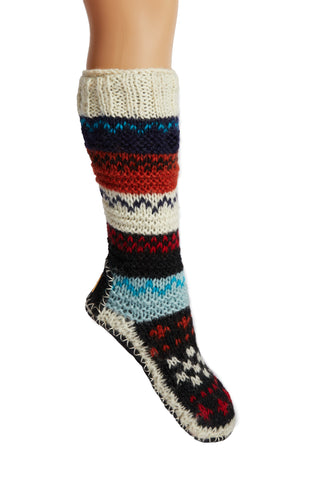
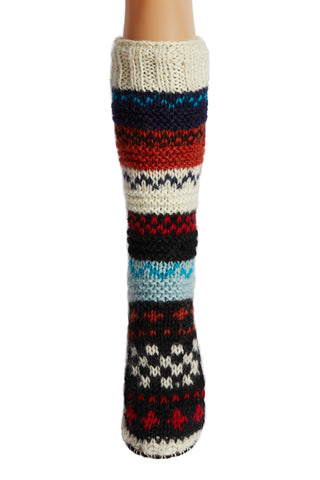
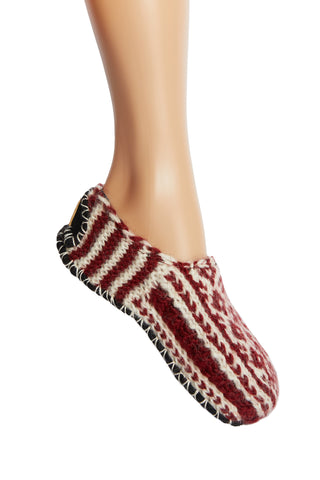
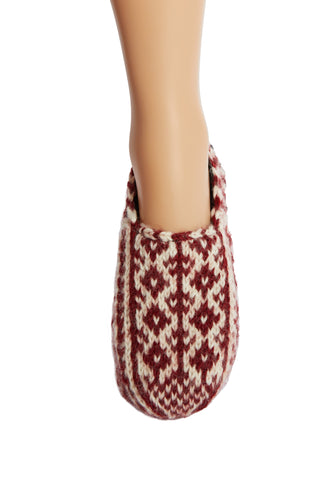
Hand Knit Wool Fleece Lined Booties Slipper Socks With Non Slip Soles
Tibetan Socks
$42.00
- Stückpreis
- per
2 color


Other Things That Help with Cold Feet at Home
Good socks are the foundation. A few other things make a meaningful difference, particularly for people dealing with Raynaud's:
Layering: Wearing a thin liner sock under a thick wool sock creates additional trapped air, which improves insulation beyond what either sock alone provides.
Pre-warming: Put socks on warm feet, not cold ones. If your feet are already cold when you put on socks, the socks have to do more work to recover warmth. Warming feet first (in a warm bath, under a blanket) and then putting on fresh socks is more effective.
Floor coverings: Hard floors draw warmth rapidly from the soles of feet. Rugs, yoga mats, or even a folded blanket near your usual sitting spot make a real difference between attacks and no attacks.
Gloves in the house: Raynaud's affects hands as well as feet. Our yak wool gloves are the indoor equivalent of our slipper socks — designed for warmth, not just wind protection. See the yak wool accessories collection →