The Best Wool Slipper Socks For Men and Women
Not all slipper socks are created equal. There is a meaningful difference between a pair knitted from genuine wool — warm, breathable, naturally antimicrobial — and one made from acrylic that mimics the look but delivers a fraction of the performance. This page is a guide to what distinguishes a genuinely good wool slipper sock from the rest, and a direct route to the pairs we make by hand in Nepal. If you already know what you want, the collection is above. If you would like to understand why wool matters, read on.
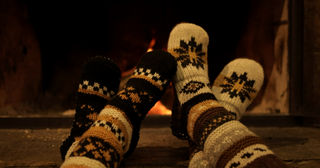
Where comfort meets craftsmanship
Discover why Tibetan Socks are the best rated wool slipper socks

What makes a great slipper sock
The two non-negotiables in a slipper sock are warmth and grip. Warmth is obvious — a slipper sock exists to keep feet comfortable on cold floors. Grip matters because cold hard floors are also slippery floors, and sliding in socks is both undignified and genuinely dangerous in older adults. Beyond those two qualities, the best slipper socks add durability, breathability, and ease of care.
Wool exceeds acrylic and fleece on most of these dimensions. It regulates temperature rather than simply holding heat, which means it remains comfortable across a range of conditions. It absorbs moisture and releases it slowly, so feet stay dry rather than damp. And it resists the compression that causes cheaper slipper socks to thin and mat within a single season. Our slipper socks are hand-knitted — each stitch placed individually — which produces a denser, more resilient fabric than machine knitting at the same gauge.
Wool Slipper Socks For Men and Women
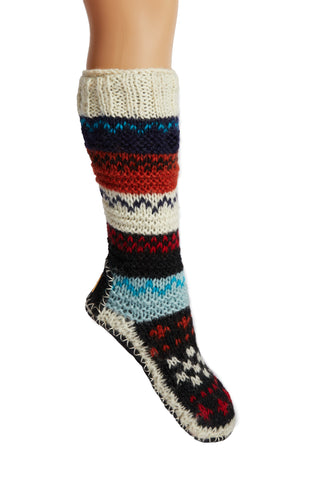
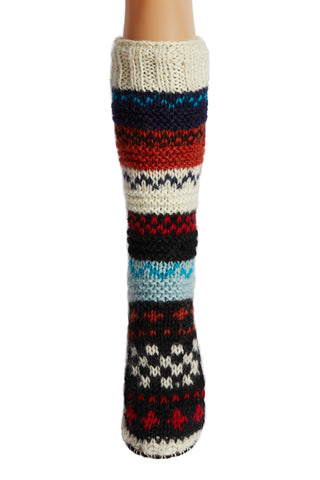
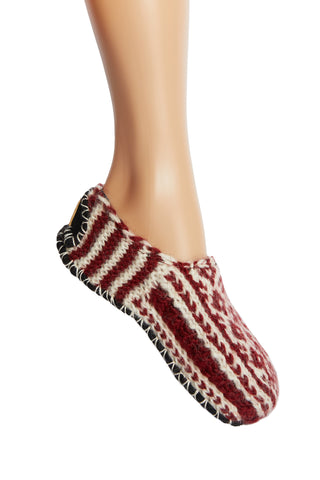
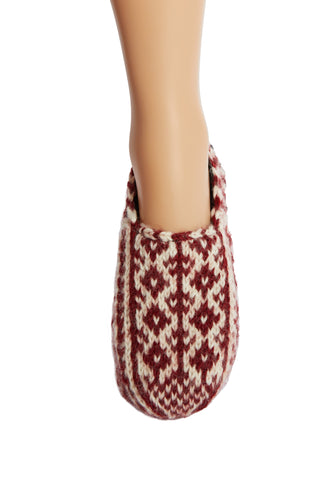
Hand Knit Wool Fleece Lined Booties Slipper Socks With Non Slip Soles
Tibetan Socks
$42.00
- Stückpreis
- per
2 color


Wool vs. Acrylic Slipper Socks
| Feature | Wool Slipper Socks | Acrylic / Fleece Slipper Socks |
|---|---|---|
| Warmth | Natural insulation — warm without overheating | Warm, but can feel stifling in warmer months |
| Breathability | High — wool fibres allow air circulation | Low — synthetic fibres trap moisture |
| Moisture management | Absorbs up to 30% of its weight; stays fresh | Holds surface moisture; prone to odour |
| Durability | Resists pilling; retains structure with proper care | Flattens and pills with regular washing |
| Grip options | Available with rubber sole or grip dots | Usually grip dots only; rubber sole less common |
| Sustainability | Natural renewable fibre; biodegradable | Petroleum-derived; sheds microplastics when washed |
| Typical lifespan | 3–5+ years with care | 1–2 seasons before visible wear |
Do you need rubber soles?
Slipper socks with rubber soles are a distinct product from grip-dot socks. A full rubber sole runs the length of the foot, providing stable underfoot coverage that makes the sock more slipper-like in behaviour — you can walk more confidently on smooth surfaces, and the sock holds its shape over the course of the day. Grip dots are applied at intervals and provide traction on hard floors but less structural support.
If you spend extended time on your feet at home — in the kitchen, at a standing desk, moving between rooms — rubber soles are worth the slightly higher cost. If you primarily want sock-like warmth for sitting and light movement, grip dots are sufficient. Our collection includes both: browse the full range to find the right option for how you actually move through your home.
Choosing the best slipper socks for you
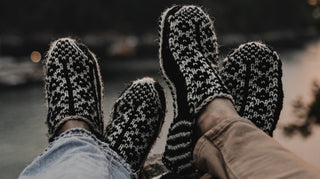
try them on
A pair of wool slipper socks made well enough to last several years is a better investment than replacing synthetic ones every season. Our collection covers the full range — from light grip-dot styles for mild weather through to thick fleece-lined socks for the coldest floors. All are hand-knitted in Nepal and shipped with a signed artisan card.