
The World's Finest Wool Slipper Socks: New Zealand Wool, Hand-Knitted in the Himalayas
Not all wool is equal. And not all wool socks are made the same way. This guide covers what actually makes a wool sock exceptional — the fibre, the knit, the hands behind it — and why the combination of New Zealand wool and Himalayan craftsmanship produces something you won't find on a department store shelf.

Why New Zealand Wool?
New Zealand produces some of the finest sheep wool in the world. The country's temperate climate, open pastures, and strict animal welfare standards mean the fleece is dense, clean, and naturally springy. It holds warmth without feeling heavy, breathes without feeling scratchy, and softens with every wash.
Our wool comes from cruelty-free New Zealand farms — no mulesing, no stress practices. The raw fleece is then shipped to the Kathmandu Valley, where it's processed, spun, and hand-knitted by the women who've been doing this work their whole lives.
The Tibetan Socks difference: New Zealand wool for the fibre. Nepal for the craft. The result is a sock that carries the best of both — premium raw material shaped by generations of Himalayan knitting tradition.
Wool Warmth comparison
How does hand-knitted New Zealand wool compare to other common sock materials? The chart below shows relative warmth and insulation quality based on fibre density and thermal retention.

Frequently asked questions
FIBRE COMPARISON: WHAT YOU'RE REALLY BUYING

What makes hand knitting different
A machine can knit 1,500 stitches per minute. A Himalayan artisan knits perhaps 40. That gap isn't inefficiency — it's intentionality. Each stitch is placed with consistent tension, checked by hand, corrected in real time. The result is a fabric with far more structural integrity than anything a loom can produce at speed.The women in our partner villages in the Kathmandu Valley have been knitting since childhood. The technique is passed down through families. A pair of Tibetan Socks represents not just hours of work — it represents a lifetime of accumulated skill.
Slipper Socks Collection
Shop our best-selling, warmest styles for men and women
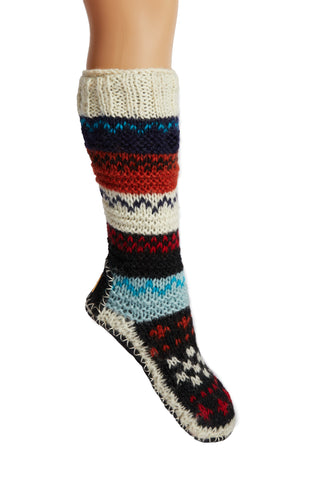
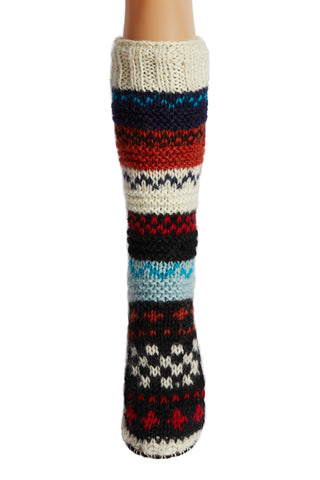
Hand Knit Wool Long Fleece Lined Slipper Socks With Non Slip Soles
Tibetan Socks
$48.00
- Unit price
- per
5 colors, 5 sizes


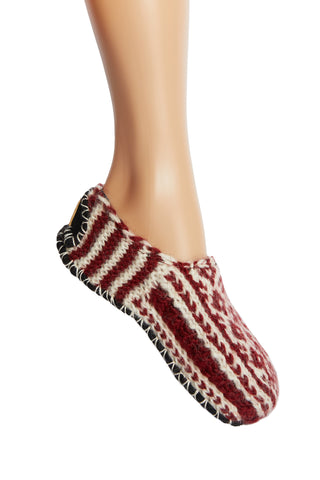
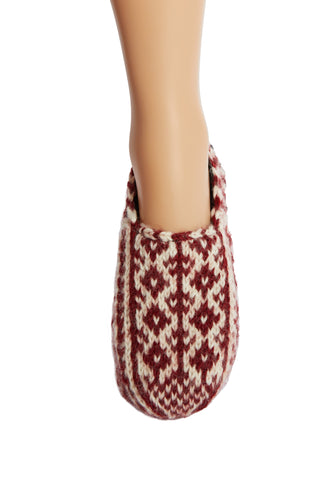
Hand Knit Wool Fleece Lined Booties Slipper Socks With Non Slip Soles
Tibetan Socks
$42.00
- Unit price
- per
2 colors, 5 sizes


Hand Knit Wool Fleece Lined Mid Bootie Slipper Non Slip Soles
Tibetan Socks
$44.00
- Unit price
- per
6 colors, 5 sizes


Caring for your wool slipper socks
Wool is more forgiving than most people think — but it does have preferences.
Washing: Hand wash in cool water with a gentle wool wash, or use the delicate cycle in a mesh laundry bag. Warm water will felt the wool and shrink the sock.
Drying: Lay flat to dry. Never tumble dry. High heat breaks down wool fibres and shortens the life of the sock dramatically.
Frequency: Wool naturally resists odour. You don't need to wash after every wear — airing them out is often enough.
Storage: Fold, don't roll. Store in a cool, dry place. Cedar blocks near your sock drawer will deter moths.